
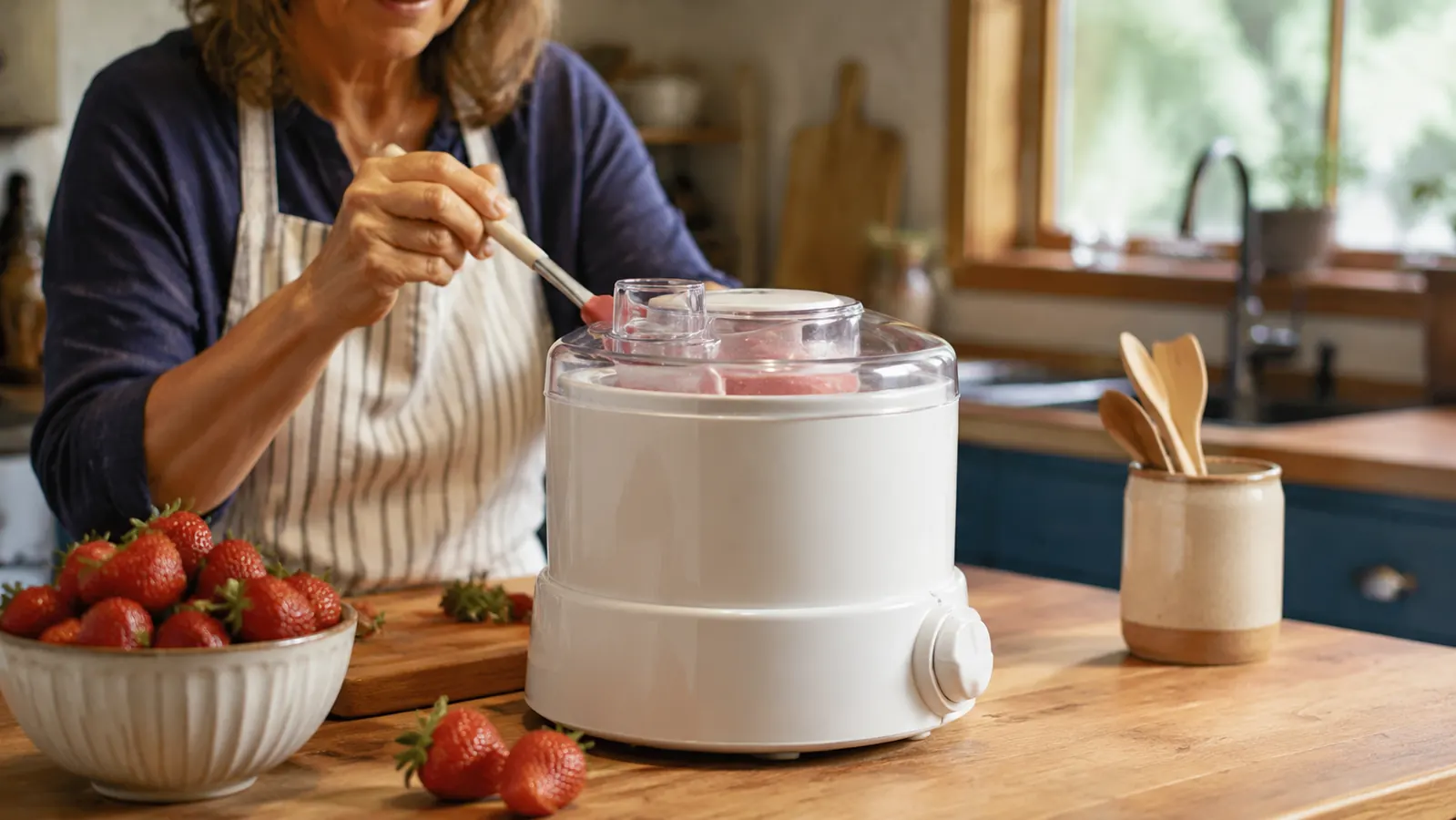
I'll be straight with you before we get into the fine print. My granddaughter Emma asked for homemade mint chip ice cream for her ninth birthday back in June, and that's the whole reason I own a Cuisinart ICE-21P1 today. Twelve batches later, some good, two that came out closer to soft serve soup, I've got opinions nobody put in the marketing copy on the Amazon page.
Thirty years running a diner line in Toledo taught me one thing above everything else. Equipment tells the truth eventually, no matter how nice the box looks. So this isn't going to be a puff piece. I'm going to tell you exactly what surprised me, what annoyed me, and where the Cuisinart still earns its shelf in my kitchen next to Carol's stand mixer, because plenty of gadgets that looked good on paper ended up in a box in the garage.
Most reviews you'll find are either five-star cheerleading from someone who used the thing twice, or one-star rage from someone whose freezer bowl never froze right and they never figured out why. I wanted something in between. Real batches, real mistakes, and the specific fixes that turned a mediocre first attempt into ice cream that actually beat what I used to buy at the grocery store on Airport Highway.
The Quick Verdict
A genuinely capable little ice cream maker for the price, but the 24-hour freezer bowl and the 1.5-quart batch size mean you have to plan around it, not reach for it on a whim.
Amazon Check Today's Price →Still Buying Pints With a Label You Can't Pronounce?
If you're tired of grocery-store ice cream loaded with stabilizers and gums, the Cuisinart ICE-21P1 lets you make a batch with four ingredients you actually recognize. Check today's price before deciding.
Amazon Check Today's Price on Amazon →How I've Used It
I've run this machine twelve times over about nine weeks, not a full season, just enough batches to get past the honeymoon phase and into the part where you notice the machine's actual habits. Vanilla bean twice, mint chip for Emma's birthday, a strawberry batch using berries from Carol's garden, a bourbon butter pecan I made for myself on a Friday night, and a few sorbets when we had extra peaches sitting around going soft on the counter.
I didn't baby it. I ran the motor for the full 25 to 30 minutes on the thicker custard bases, I dumped in mix-ins at different points to see what happened, and I let the bowl sit in the freezer anywhere from 20 hours to four full days to see if the freeze time actually mattered. Spoiler, it does, and it matters more than anything else in this whole review.
What I did not do is treat this like a commercial batch freezer, because it isn't one and Cuisinart never claimed it was. This is a $60 to $70 countertop unit with one job. Judged against that job, and not against some $400 compressor machine that sits on a restaurant counter, it mostly delivers, and it delivers consistently once you understand the two or three quirks that trip up first-time owners.
I also asked Carol to run three of the batches herself, no coaching from me, just the printed instruction card that comes in the box. She's not a gadget person and she doesn't read manuals front to back. Her results were shakier than mine on the first attempt and dialed in by the third, which told me the learning curve is real but short, maybe two or three tries before it clicks.
The 24-Hour Freezer Bowl Nobody Warns You About
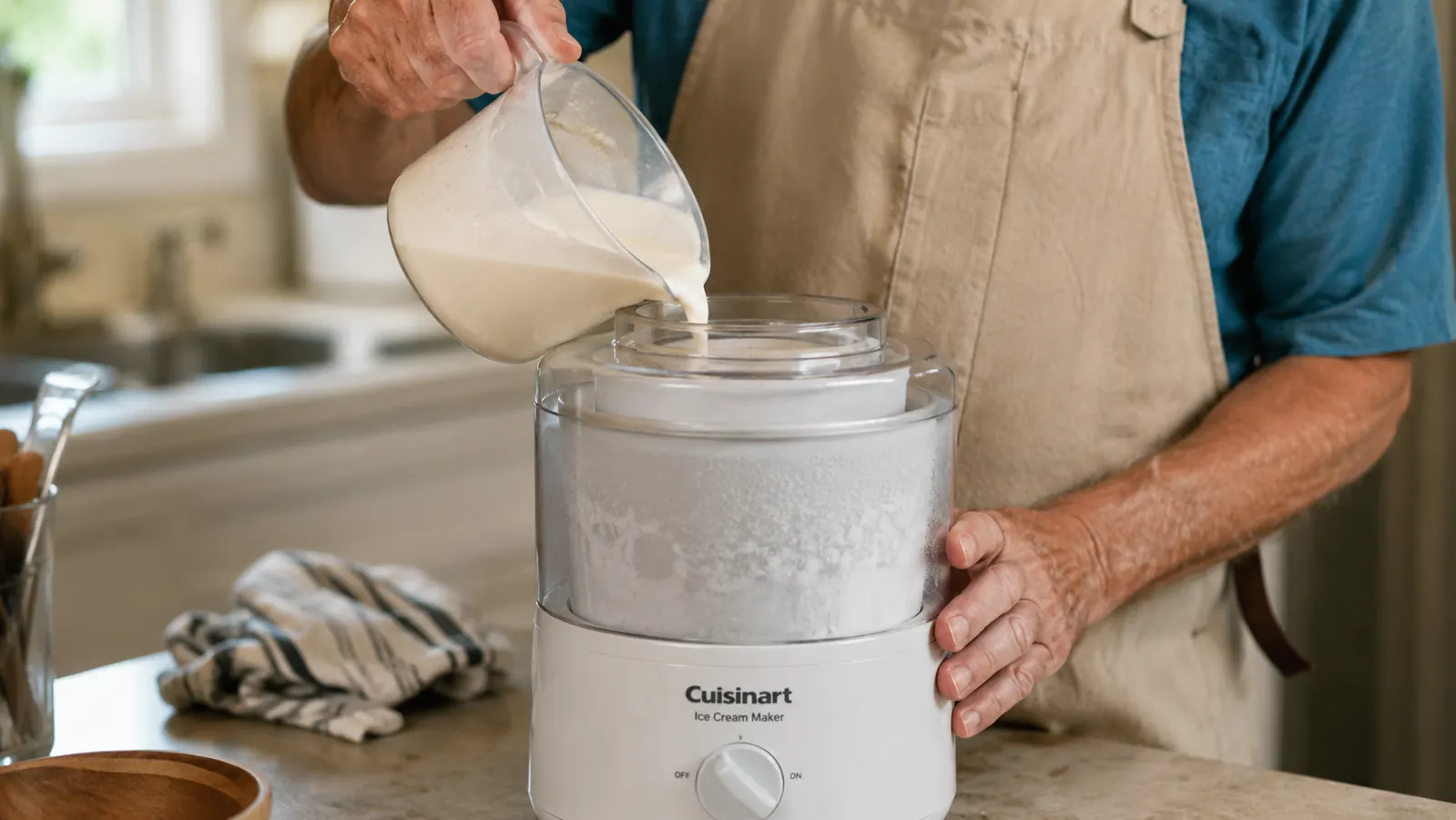
Here's the thing the box copy glosses over. That double-insulated freezer bowl needs a genuinely cold, genuinely empty freezer for at least 24 hours before it'll do its job right. Not the door shelf. Not laid flat next to a stack of frozen pizzas that block airflow. Down in the back, standing upright if you can manage it, away from anything that gets pulled in and out all day.
The first time I used it, I froze the bowl overnight in a freezer that also had a full turkey breast and two bags of Carol's frozen green beans crowding it. Nineteen hours in, I poured in my base and got something closer to a thick milkshake after 30 minutes of churning. Not ice cream. A shake I put in the freezer for two hours to save it, and even then the texture was grainy instead of smooth.
The second time, I cleared a shelf, stood the Cuisinart bowl up against the back wall of the freezer, and gave it a full 30 hours. Same base, same recipe. It set up into real, scoopable soft serve in about 22 minutes. Same bowl, same machine, completely different result. That's not a defect. That's just physics nobody bothers explaining before you buy, and it's the single biggest reason people leave frustrated one-star reviews for a machine that actually works fine.
The practical upshot for a two-person household, or a house like mine with grandkids in and out, is that you basically need a second bowl if you want ice cream more than once a week. I ended up buying a spare freezer bowl separately so one is always ready while the other is in use. That's an extra cost the reviews rarely mention up front, and it's worth budgeting for before you commit to using this machine regularly instead of occasionally.
What the Motor Actually Sounds Like, and When It Struggles
The Cuisinart's motor is not silent. It's a low, steady hum, louder than a stand mixer on its lowest speed, quiet enough to run during a football game but not quiet enough to run past a sleeping baby in the next room. I timed it at right around 30 to 35 minutes for most of my full-cream bases to reach soft serve consistency, closer to 20 minutes on the lighter sorbets.
Where it struggles is mix-ins. The first time I made the mint chip for Emma, I dumped a full half cup of chocolate chips in around the ten-minute mark, all at once, the way you'd toss chips into cookie dough. The motor bogged down noticeably, the dasher slowed, and I could hear the strain in the hum. It recovered, but I don't love hearing a motor labor like that, and it made me wonder how many chips is too many over a long enough timeline.
By batch three I'd figured out the fix. Add mix-ins gradually, in small handfuls, over the last two or three minutes of churning, with the machine already running smoothly. Do it that way and the Cuisinart handles chocolate chips, chopped pecans, and crushed cookies without complaint. It's a small technique nobody puts in the instruction booklet, and it makes a real difference in how the machine sounds and how long the motor lasts over years of regular use.
The Texture Trade-off: Soft Serve vs. Scoop-Ready
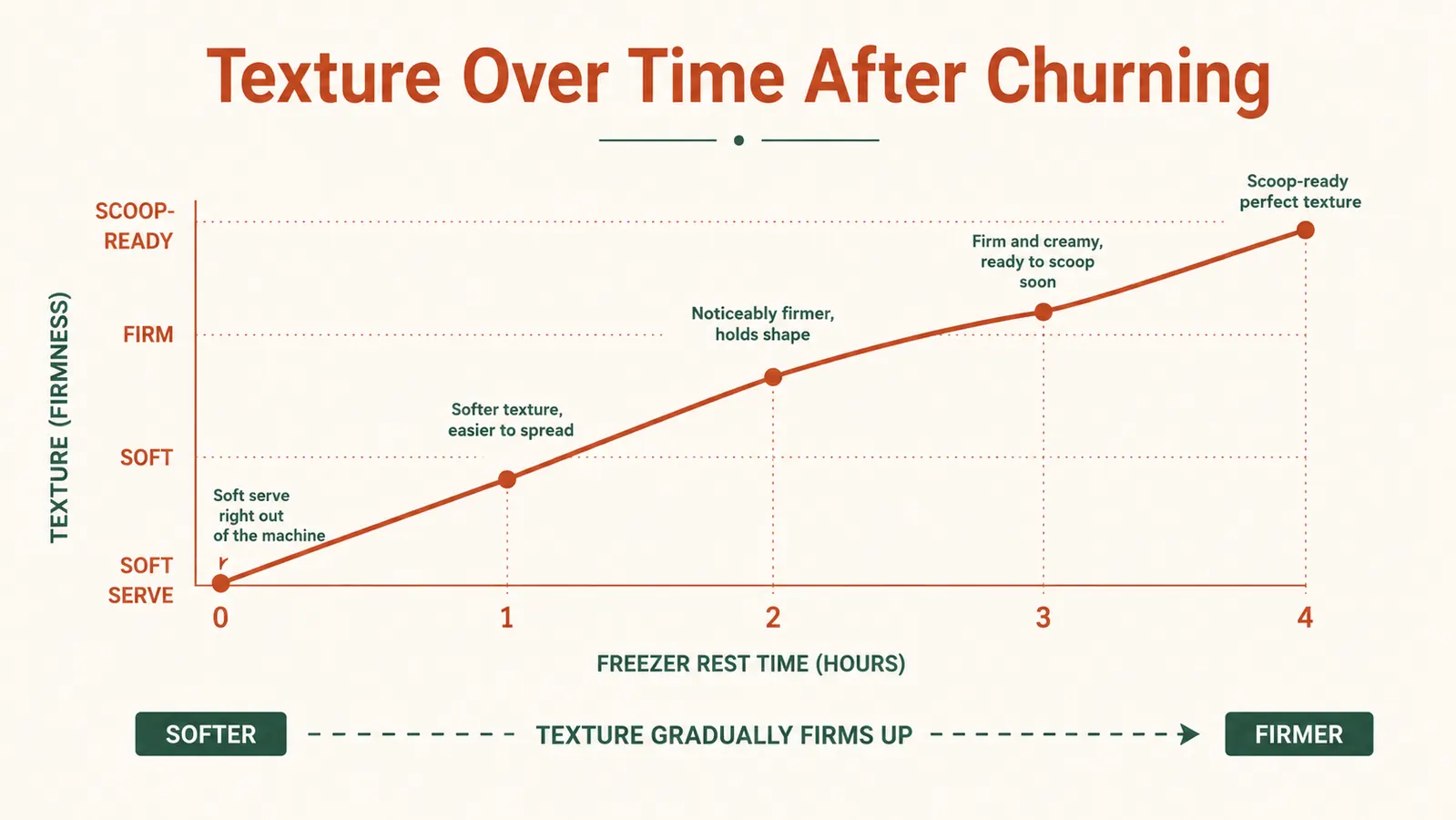
Every single batch that comes out of the Cuisinart is soft serve, not the firm, scoopable stuff you get from a pint in the grocery freezer. That's true of basically every home ice cream maker in this price range, but it still catches new owners off guard. My wife Carol was expecting to eat a scoop straight from the machine the first night and was a little let down when it looked more like frozen yogurt from a mall kiosk instead of the churned, hard-frozen ice cream she pictured.
The fix is simple but it means more planning than a lot of buyers expect. You transfer the soft serve into a container, press plastic wrap directly against the surface to keep ice crystals from forming, and let it firm up in the freezer for three to four hours before you serve it. Skip that step and you'll get a texture that melts almost as fast as it hits the bowl, which isn't the machine's fault, it's just how a home churn works without a hardening cabinet.
Once you build that extra freeze time into your plan, the actual flavor and texture of the finished product is genuinely good. My bourbon butter pecan batch, after a four-hour hardening freeze, had a dense, creamy texture that beat most of the pints I've bought at the store. It's not instant gratification, though. If you're picturing walking into the kitchen and having ice cream in 20 minutes flat, adjust that expectation to more like five hours start to finish, counting the hardening time, and plan your dessert timing the day before if you're hosting company.
Cleanup Isn't as Bad as You'd Think, but There's a Catch
After thirty years scrubbing hotel pans and Hobart bowls, I have a low tolerance for equipment that turns cleanup into a chore. The Cuisinart mixing bowl paddle, called the dasher, comes off easily and hand washes clean in about a minute under warm water. No sticky residue, no hard-to-reach corners. That part is genuinely well designed, and it's the closest thing to restaurant-grade practicality on this whole machine.
The catch is the freezer bowl itself. You cannot put it in the dishwasher, and you should not submerge it in hot water, because that risks damaging the sealed coolant gel inside the double-insulated walls. It needs a quick hand wash with warm, not hot, water and a gentle wipe down, then it has to go right back in the freezer if you want it ready for the next batch. Miss that step and forget it in the sink overnight, and you've lost your head start on tomorrow's ice cream, which means you're back to that 24 to 30 hour wait all over again.

What It Actually Costs You Beyond the Sticker Price
The Cuisinart itself sits under $70 most days, which looks cheap next to compressor machines running $250 and up. But the real cost shows up after you own it. A replacement or spare freezer bowl runs another $30 to $40, and if you want ice cream more than once a week without a full day's wait between batches, you're basically buying two machines' worth of parts for one machine's price of admission.
There's also the freezer space itself. That bowl needs to occupy real, dedicated square footage for a day and a half at a time, and in a house with a normal-sized freezer already packed with meat, vegetables, and the ice trays the grandkids empty constantly, that's not nothing. I ended up rearranging shelves permanently to keep a spot open for it, which is a bigger ask than the box lets on.
Against all that, homemade batches still come out cheaper per serving than the pints Carol and I used to buy, especially once you're using fruit from the garden or milk and cream bought in bulk. It's just not the free lunch the price tag makes it look like at first glance. Budget for the spare bowl and the freezer real estate, and the actual math still works out in your favor over a year of regular use.
What I Liked
- Genuinely ready in 20 to 30 minutes of churn time once the freezer bowl is properly frozen
- Simple one-switch operation, no app, no programming, no learning curve
- Doubles as a sorbet and frozen yogurt maker without buying a second machine
- Compact enough to store in a cabinet instead of leaving it on the counter full time
- Priced well under most compressor-based machines while still producing real, creamy results
Where It Falls Short
- The freezer bowl needs a full 24 to 30 hours in a cold, uncrowded freezer, which trips up first-time buyers
- Only makes 1.5 quarts, which disappears fast with grandkids around
- Motor bogs down if mix-ins go in too fast or all at once
- Every batch comes out soft serve, not scoop-ready, so you need three to four extra hours of hardening time
- The plastic housing feels built to a price point, not built to outlast a decade of regular use
The Cuisinart isn't magic. It's a bowl of frozen coolant and a motor that stirs. Once you accept that, it stops disappointing you and starts earning its spot.
Who This Is For
If you've got the freezer space to dedicate a shelf to the bowl, and you're the type who plans a dessert a day or two ahead instead of deciding at 6pm, this is a genuinely solid buy. It's also a good fit if you or someone in the house has to watch added sugar or additives, since you control every ingredient that goes in. For $60-something, the Cuisinart gets you real homemade ice cream without the four-figure price tag of a compressor machine, and it's small enough that it earns its cabinet space even if you only use it a couple times a month.
Who Should Skip It
If your freezer is already packed tight, or you want ice cream on demand without a day of advance planning, this isn't going to make you happy. Same goes if you're feeding a crowd regularly. A single 1.5-quart batch barely covers four people with modest servings, and running back-to-back batches means owning a second freezer bowl. If instant, single-serving texture control matters more to you than batch flavor from scratch, it's worth reading how this stacks up against a Ninja CREAMi before you buy either one, because the two machines solve genuinely different problems.
Twelve Batches In, I'd Still Buy It Again
Knowing what I know now about the freezer bowl and the planning it takes, I'd still buy the Cuisinart ICE-21P1 tomorrow. It just does the job honestly, without hiding what it is. See the current price and decide for yourself.
Amazon Check Today's Price on Amazon →