
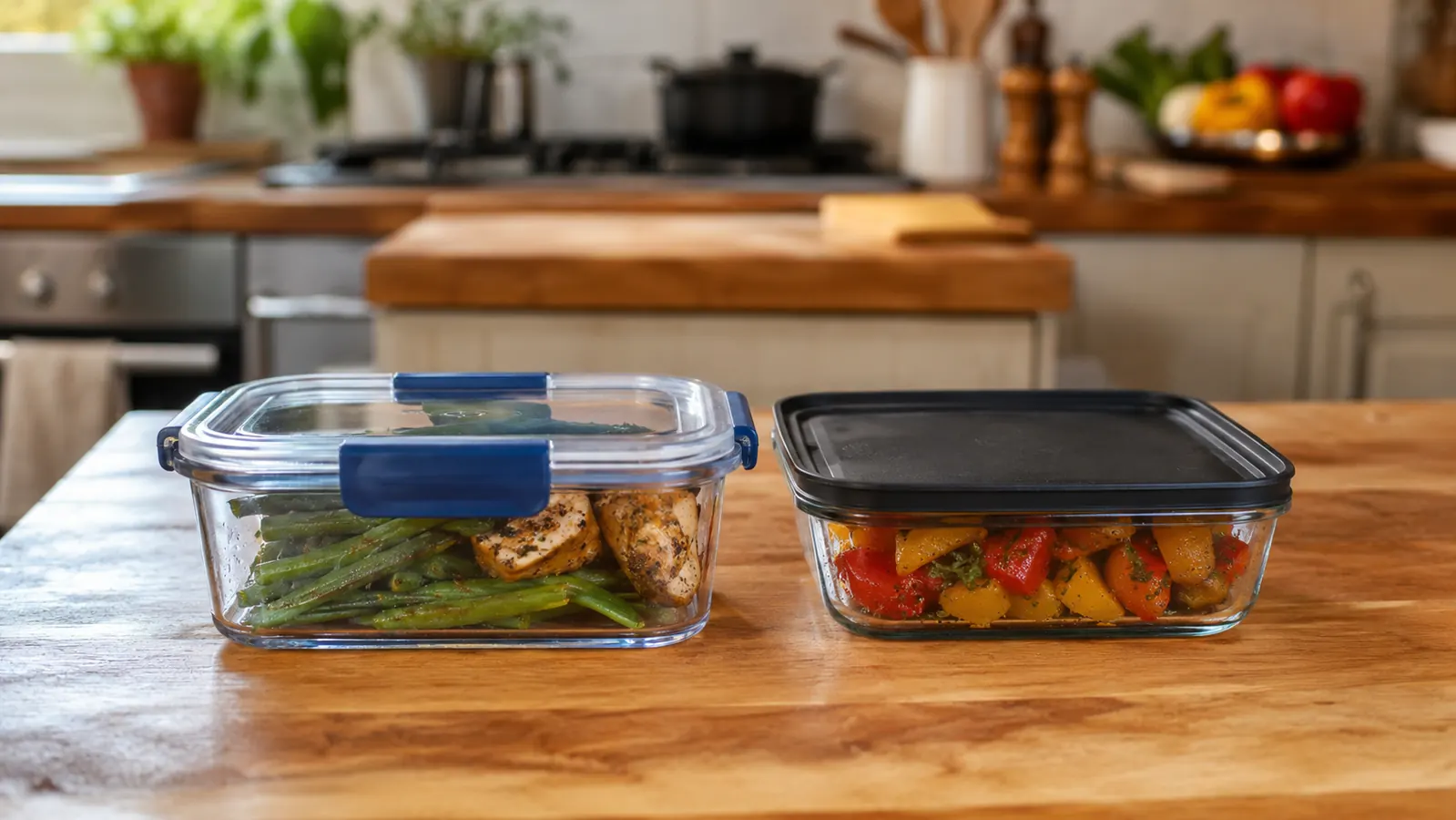
Carol's sister redid her kitchen two years ago and switched her whole family over to glass storage containers, and ever since, Carol's been asking why we still keep the Rubbermaid Brilliance 44-Piece Food Storage Set in daily rotation instead of following suit. I spent thirty years on a diner line handling both glass and plastic storage, so I had opinions going in, but opinions aren't proof. I borrowed a comparable glass set from Carol's sister for two months this spring and ran it alongside our Rubbermaid Brilliance set in the same kitchen, the same meals, the same fridge shelves, before I'd trust myself enough to write any of this down.
Short version up front. If you want containers that survive a grandkid's backpack, stack without the fear of shattering, and keep a leak-proof seal on liquids, the Rubbermaid Brilliance set wins that fight outright. If you mostly store food in your own fridge, never travel with your containers, and can't stand the thought of plastic touching hot leftovers, glass earns its keep. They're not really competing for the exact same job, but after two months of running both side by side, I can tell you exactly where each one pulls ahead and where it falls short.
| Rubbermaid Brilliance 44-Piece Food Storage Set | Glass Storage Containers | |
|---|---|---|
| Price | $89.99 at today's price for all 44 pieces | Typically $60 to $110 for a comparable 18 to 24 piece set |
| Weight | Light enough for a kid to carry a full backpack of them | Noticeably heavier, adds real weight to a lunch bag or backpack |
| Breakage Risk | Survived every drop onto tile and hardwood during testing | Cracked or shattered on two separate hard-floor drops |
| Material | BPA-free Tritan-style clear plastic | Tempered soda-lime glass, clear body |
| Lid and Seal | Rubber gasket with crisscross latching lid, leak-proof on liquids | Plastic snap or clip lid, seal quality varies by brand |
| Stacking | Nests empty and stacks flush full, lids clip on when unused | Stacks but doesn't nest, heavier to lift into a tall tower |
| Microwave Use | Microwave-safe with lid off, no warping after repeated use | Microwave-safe with lid off, handles higher direct heat |
| Oven Safety | Not oven safe under any circumstances | Many glass sets are oven safe up to 400 to 425 degrees |
| Staining and Odor | Faint tinting possible after months of tomato sauce and curry | Never stains, never holds onto lingering food odors |
Where Rubbermaid Brilliance Wins
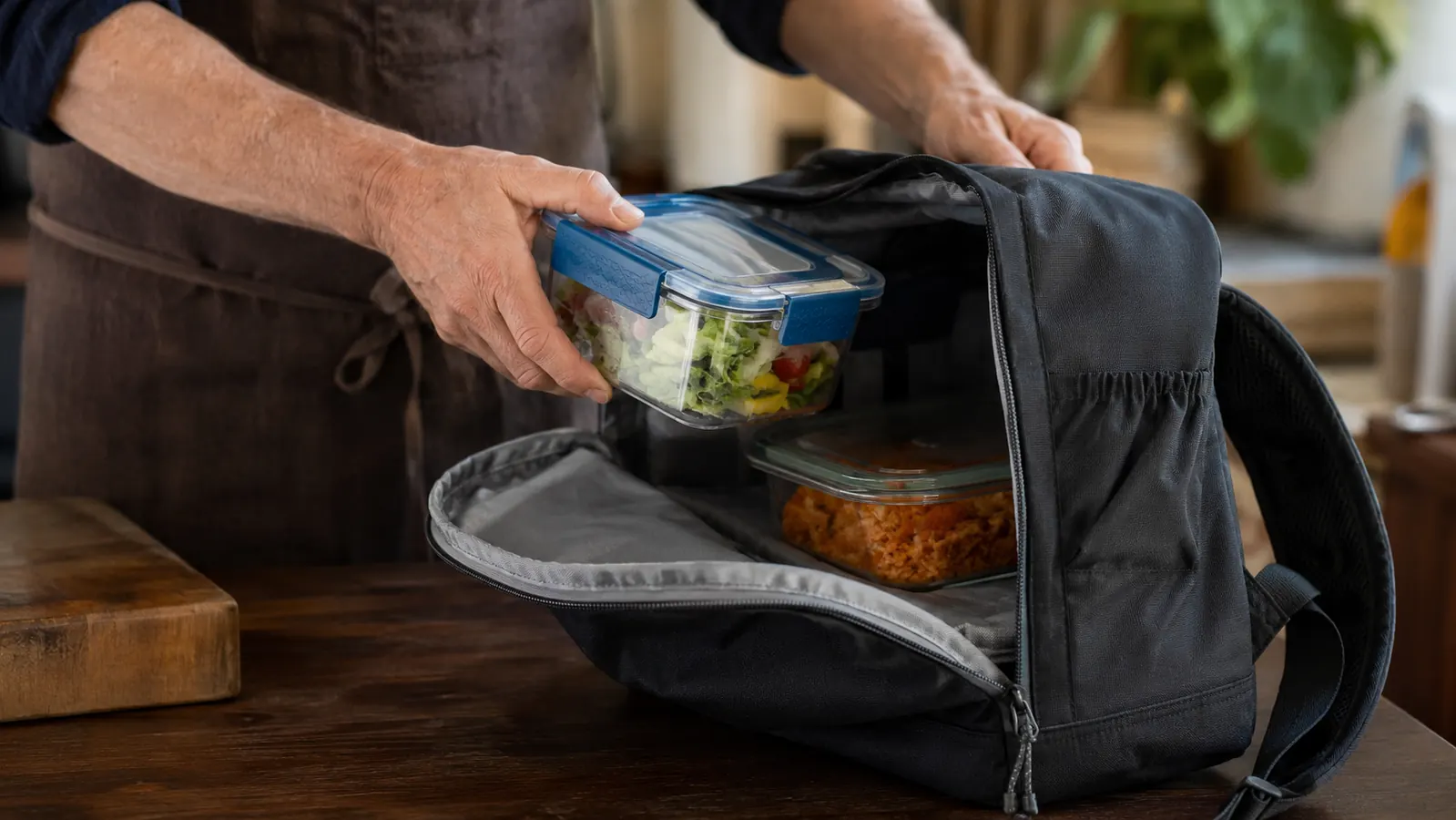
Weight is the first thing you notice once you've handled both sets back to back. A full Rubbermaid Brilliance container feels like nothing in your hand, which matters a lot more than people expect once you're the one packing four lunches every school morning. My granddaughter Maddie can load her own backpack with two Rubbermaid Brilliance containers and not think twice about the extra weight. When I tried the same thing with two glass containers from Carol's sister's set, Maddie noticed immediately, and so did her shoulder by the end of the school day. If you're moving containers around, not just parking them in a fridge, that weight difference adds up fast.
Then there's the leak-proof seal, which is where the Rubbermaid Brilliance set separates itself the most clearly. I ran the same upside-down test with both sets, tomato soup, four latches snapped down, held over the sink for a full minute. The Rubbermaid Brilliance lid didn't leak a drop. The borrowed glass container's plastic snap lid let soup seep out along one edge within about twenty seconds. Not every glass set is built the same, and some pricier ones do better, but the rubber gasket on the Rubbermaid Brilliance lid is doing real sealing work that a lot of glass sets simply don't match at a comparable price point.
Stacking is the other place the Rubbermaid Brilliance set pulled ahead, and it's not close. Empty Rubbermaid Brilliance containers nest inside each other and the lids clip onto the stack, so a cabinet full of them takes up a fraction of the space empty glass containers need. The borrowed glass set didn't nest at all, every empty container sat full-size on the shelf whether it had food in it or not, and within two weeks that set had eaten up nearly double the cabinet space our Rubbermaid Brilliance containers use for the same number of pieces. If your cabinet space is already tight, that difference alone might settle the question before price or breakage ever comes into it.
Where Glass Storage Containers Win
I'll give glass its due, because it earns real points in a couple of places plastic can't touch. You can pull a glass container straight from the fridge and set it in a 375-degree oven to reheat a casserole without transferring it to another dish first, something you'd never do with the Rubbermaid Brilliance set. For anyone who bakes a lasagna on Sunday and reheats it in the oven all week, that's a genuine convenience the plastic set simply doesn't offer, since Rubbermaid Brilliance is explicitly not oven safe.
Glass also never stains and never holds onto smell, no matter what you store in it. After two months, a couple of our most-used Rubbermaid Brilliance containers had picked up the faintest tint from marinara and turmeric-heavy curry, nothing you'd notice on the shelf, but visible if you hold one up to a window. The borrowed glass containers looked exactly the same on day sixty as they did on day one, tomato sauce, chili, curry, none of it left a mark. If you're someone who likes containers that look brand new indefinitely and don't mind the extra weight and cost that comes with glass, that's a real point in its favor.
The set that survived a backpack drop test glass containers couldn't pass
If you want food storage that travels well and won't shatter the first time it hits the floor, the Rubbermaid Brilliance 44-Piece Food Storage Set is the one I'd point you to. Leak-proof latching lids, dishwasher-safe, and light enough for a kid to carry.
Amazon Check Today's Price on Amazon →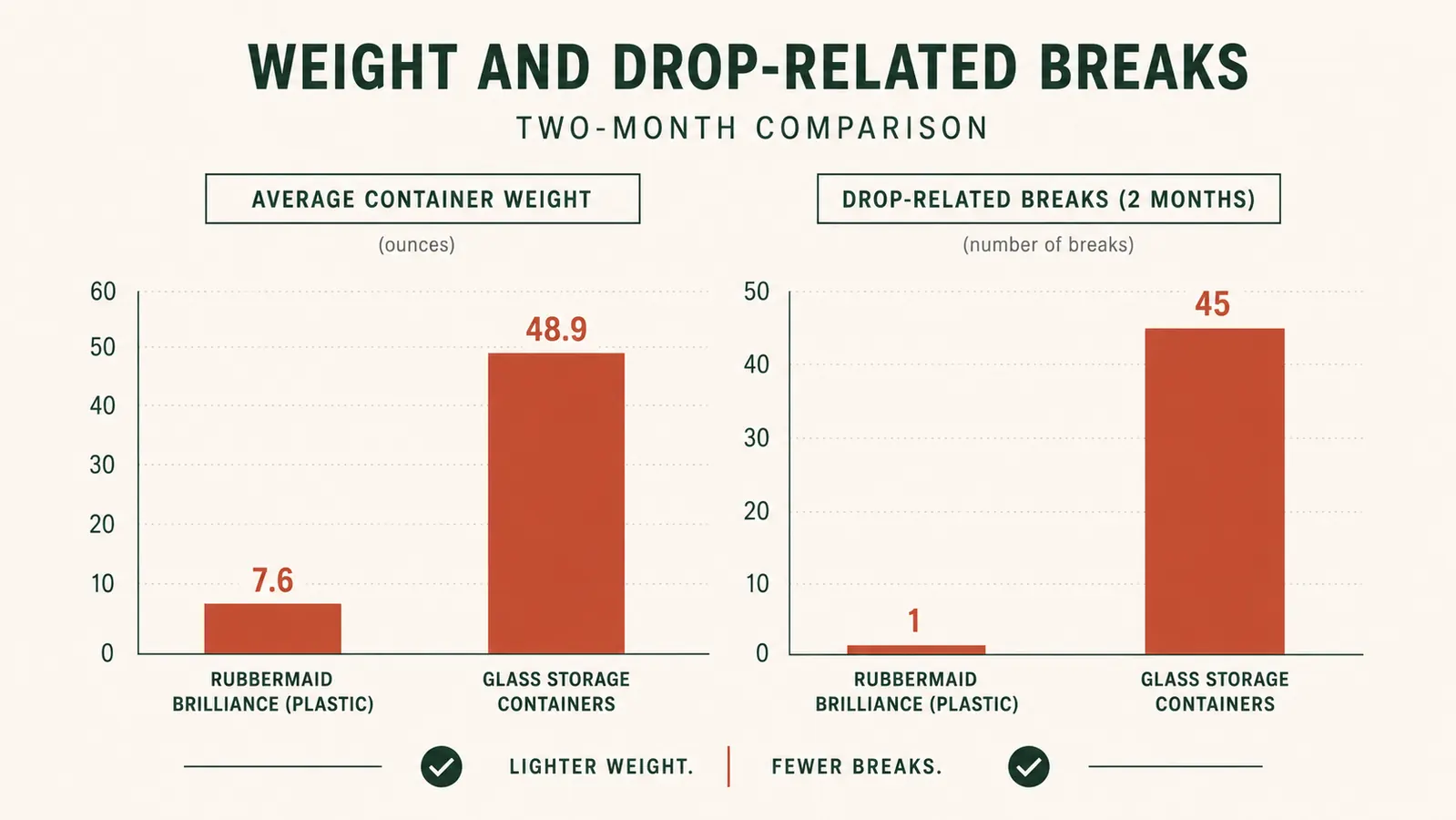
Weight and Breakage: What Actually Happens in a Real Kitchen
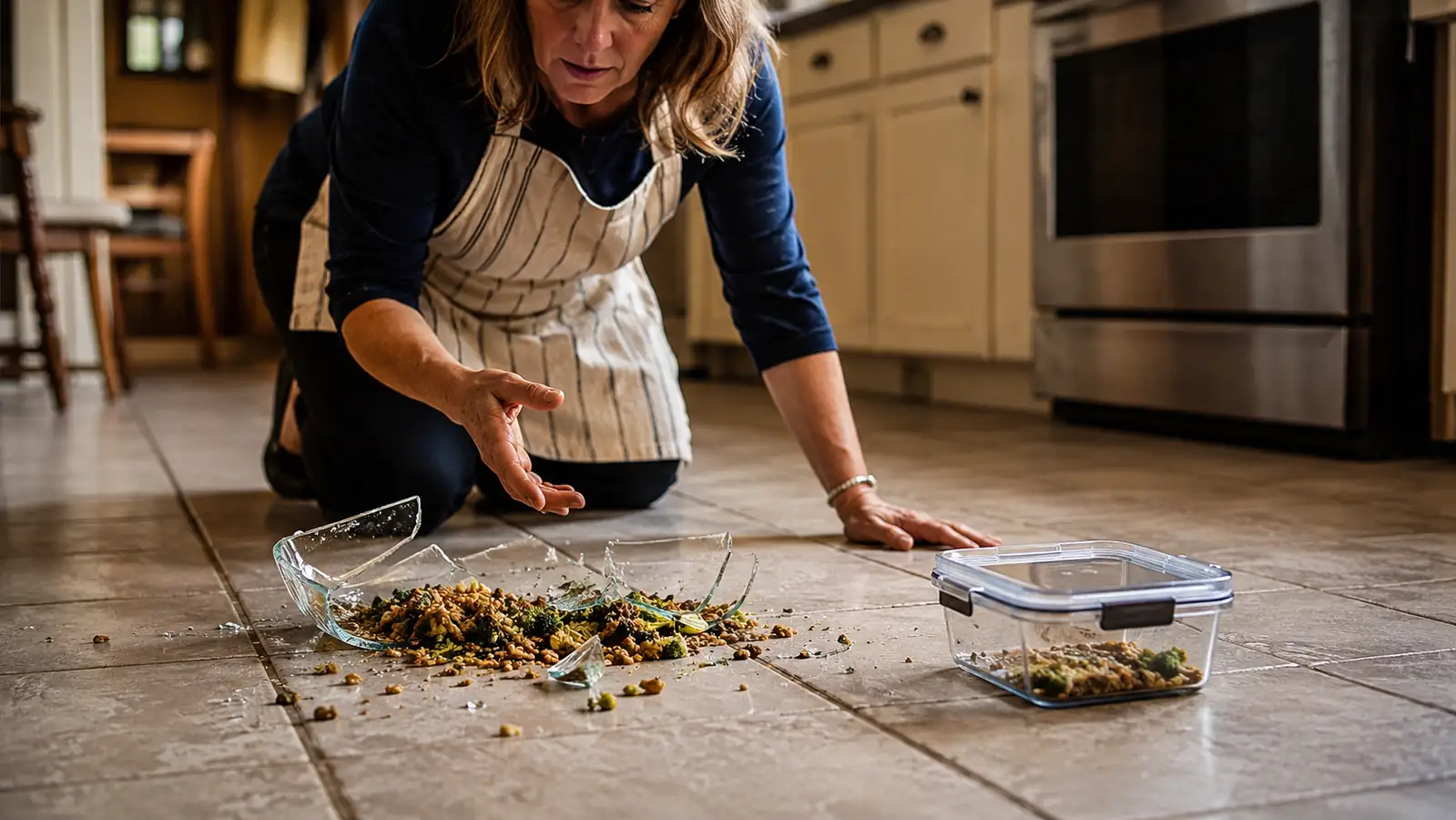
The breakage test wasn't something I planned, it just happened the way real kitchen life happens. In week three of the trial, Eli, my twelve-year-old grandson, was carrying a stack of containers from the counter to the fridge and clipped the edge of a cabinet, sending one glass container and one Rubbermaid Brilliance container to the tile floor from about the same height. The glass container cracked clean through one corner and spilled rice and beans across the floor. The Rubbermaid Brilliance container bounced, popped open on impact since it wasn't latched, and didn't so much as scratch. That wasn't a staged test with a tape measure and a clipboard, that was a twelve-year-old with an armful of leftovers, which is closer to how these things actually get used in most houses.
A second break happened when Carol's sister's own glass set, the same line I borrowed from, had a container slip off a fridge shelf onto the floor while she was reorganizing for a family dinner. That one shattered outright rather than just cracking. I'm not saying glass is fragile in general, tempered glass is genuinely tough stuff, but it has a breaking point that plastic simply doesn't share, and once you factor in kids, crowded fridges, and busy kitchens, that breaking point gets tested more often than the marketing photos would have you believe.
Staining, Odor, and the Freezer Test
Freezer duty is where I expected glass to have an edge, since I've heard people say glass handles freezing better than plastic. What I actually found was more complicated. I froze a batch of chili in both a Rubbermaid Brilliance container and a glass container, filling each about three-quarters full to leave room for expansion, exactly like the instructions on both sets recommend. The Rubbermaid Brilliance container came through fine, no cracking, no warping. One of the glass containers, filled slightly higher than it should have been out of my own carelessness, developed a hairline crack from the liquid expanding as it froze. That's on me for overfilling it, but it's also a real risk glass carries that plastic doesn't, since a cracked plastic container just gets replaced while a cracked glass container can shatter the next time you handle it.
On the staining front, glass wins clean, no argument from me. But I'll say the staining on our Rubbermaid Brilliance containers has been minor enough after a full year of separate use in our house, faint tinting on a few pieces, nothing that's ever affected how the container performs or seals. If staining bothers you more than a little cosmetic tint, glass is the better call. If you care more about whether the container leaks, cracks, or survives a drop, the Rubbermaid Brilliance set has the track record to back it up.
Price and What You Actually Get
At today's price, the Rubbermaid Brilliance 44-Piece Food Storage Set runs under a hundred dollars for 22 containers and 22 matching lids. A comparable glass set with similar piece counts usually lands somewhere between sixty and a hundred ten dollars for fewer total pieces, since glass containers cost more to manufacture and ship. Once you factor in that glass containers are more likely to need replacing after a drop, the real cost of ownership tilts further toward the Rubbermaid Brilliance set over time, even though the sticker price on some smaller glass sets can look cheaper at first glance.
I'm not going to pretend glass doesn't have a place in a well-stocked kitchen, because it does, especially for anyone who bakes casseroles they want to reheat straight in the oven. But piece for piece, dollar for dollar, and drop for drop, the Rubbermaid Brilliance set has held up better in our house than the borrowed glass set did, and it costs less to own over the long run once you account for what happens the first time a container hits the floor.
Who Should Buy Which
If your containers are traveling, backpacks, lunch bags, the occasional potluck, or if you're storing liquids and sauces you can't afford to have leak, get the Rubbermaid Brilliance set. It's the one I'd recommend without hesitation to any family with kids handling their own lunches, since the weight and the leak-proof latch matter more day to day than most people expect until they've lived with both. If your containers mostly stay put in your own fridge, you regularly reheat casseroles straight in the oven, and you don't mind paying a bit more for something that never stains, glass storage containers are a reasonable choice too, as long as you handle them carefully and don't ask them to survive a crowded backpack or a twelve-year-old's grip. In our house, after two months of running both side by side, the Rubbermaid Brilliance set went back into daily rotation and the borrowed glass set went back to Carol's sister. Either way, measure your cabinet space and think honestly about how rough your kitchen actually is on its dishes before you decide, because that's the detail that determined the winner in ours.
Thirty years of kitchen work taught me durability beats a shiny shelf every time
The Rubbermaid Brilliance 44-Piece Food Storage Set is the set that survived every drop test, every backpack, and every leftover we threw at it. Check today's price on Amazon before your next grocery run.
Amazon Check Today's Price on Amazon →