
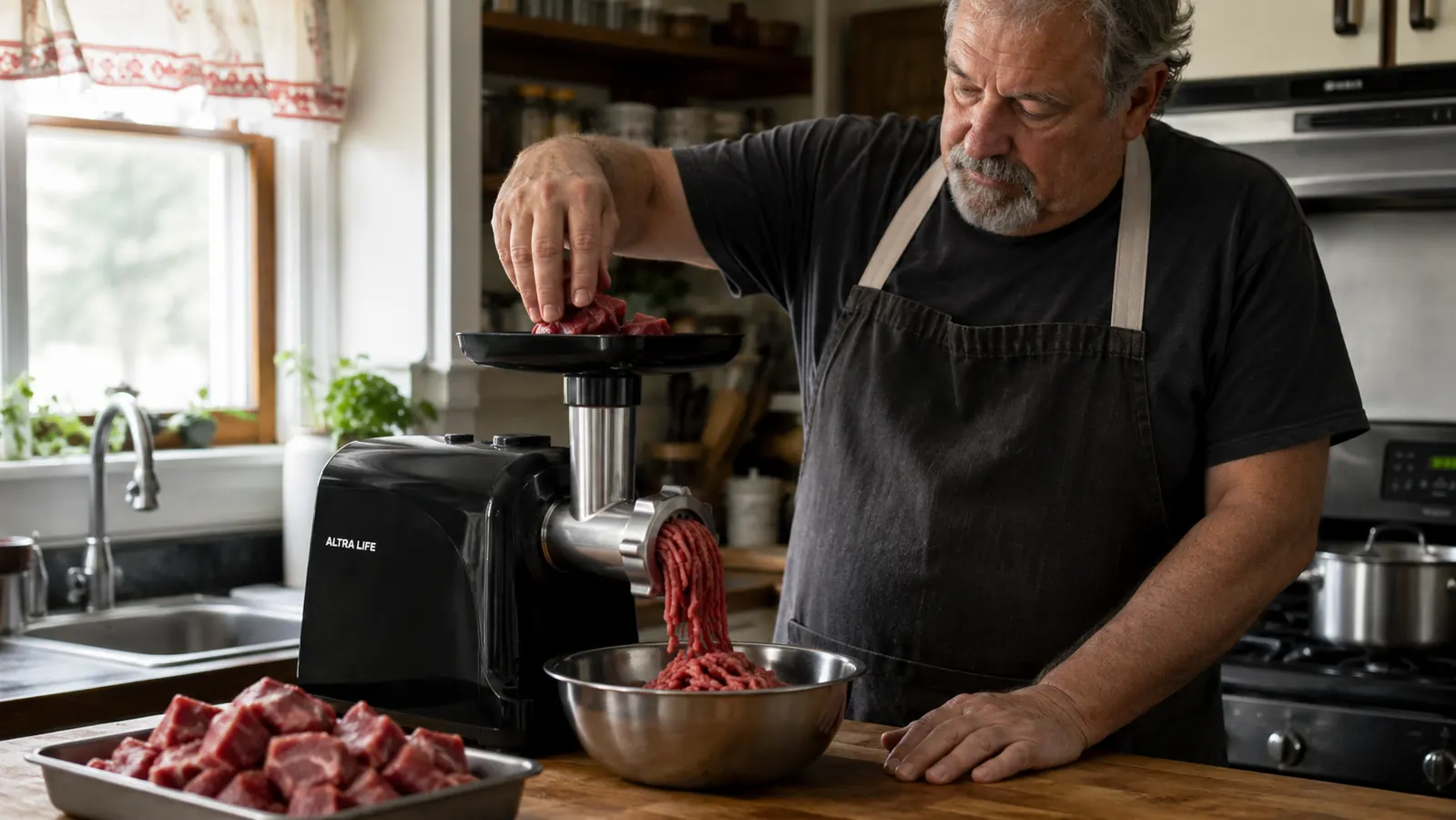
For thirty years I worked a flat-top in Toledo diners, and in all that time I never once ground my own meat, because the walk-in fridge always had a case of pre-ground beef waiting for me. Retirement changed that. Once I started cooking just for Carol and myself, and later for the grandkids on Saturdays, I got tired of paying for meat I couldn't see the fat content on, so I bought the ALTRA LIFE 2300W Electric Meat Grinder. That was almost a year ago now, and grinding my own chuck, pork shoulder, and the venison my son-in-law brings home has become a regular Saturday job in our kitchen.
This guide is the exact process I use with the ALTRA LIFE grinder, laid out the way I'd walk a new line cook through a station, one step at a time, no skipped explanations. If you've got a different electric grinder the broad strokes will still apply, but the plate sizes, the stuffer tube, and the reset button I reference are specific to the ALTRA LIFE 2300W, since that's the machine that lives in my cabinet. Set aside about forty-five minutes for your first batch. Once you've done it a handful of times, you can have four pounds of fresh ground meat ready in twenty.
The grinder that actually earns its cabinet space
Most kitchen gadgets get used twice and forgotten. The ALTRA LIFE 2300W Electric Meat Grinder is the one that's still coming out every Saturday in my kitchen, because it does the one job right without a fight.
Amazon Check Today's Price on Amazon →Step 1: Choose Your Cut and Get the Fat Ratio Right
For everyday burger, I reach for chuck roast, ideally on sale, cut from the shoulder. It's got enough fat marbled through it that you don't need to add anything, usually landing around an 80/20 lean-to-fat ratio once ground, which is what makes a burger juicy instead of dry hockey puck material. If you want leaner meat for chili or tacos, sirloin trim or round works, but plan to add a little fat back in from a cheaper cut if you're going below 85 percent lean, or the finished meat eats dry and crumbly.
For sausage I lean on pork shoulder, sometimes called Boston butt, because it holds enough fat on its own for good breakfast sausage or Italian links without doctoring. My son-in-law hunts, and venison shoulder is leaner than either beef or pork, so when I'm grinding venison for the ALTRA LIFE I usually mix in some pork fat or fatty bacon ends at about a quarter of the total weight, otherwise the finished burger has almost no richness to it and falls apart on the grill.
Whatever cut you pick, trim off any thick silver skin or heavy connective tissue with a boning knife first. The ALTRA LIFE will chew through a little gristle without stalling, but too much of it winds around the auger and slows your grinding session down, and it doesn't break down into anything pleasant in the finished meat anyway. A few minutes of trimming up front saves you a jammed grinder twenty minutes into the job.
Step 2: Chill Everything Before You Touch the Grinder
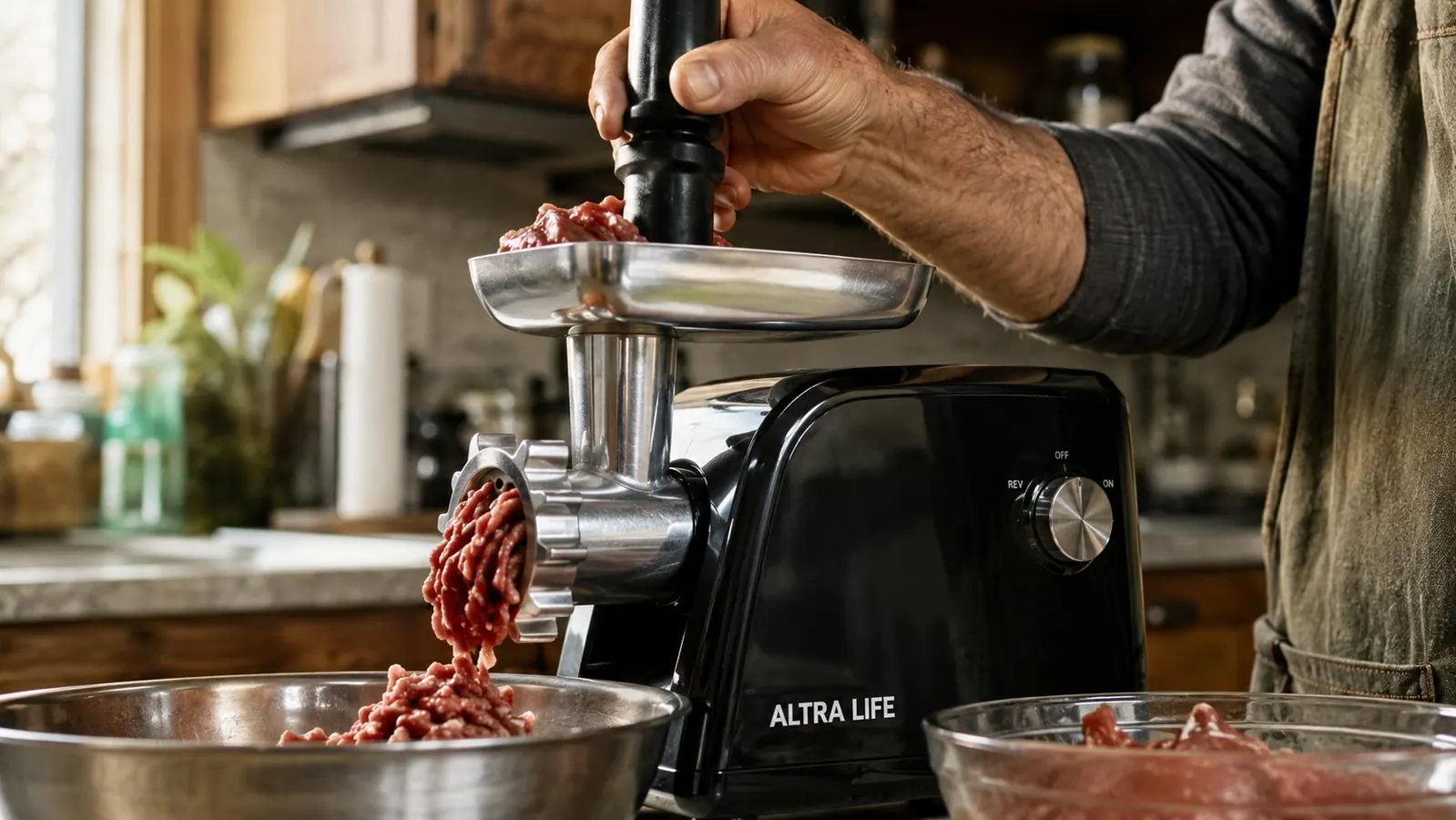
This is the step most first-timers skip, and it's the single biggest reason home-ground meat comes out mushy instead of clean and distinct. Cut your trimmed meat into strips or cubes about an inch thick, small enough to feed the hopper without jamming, and lay them out on a sheet pan. Put the whole pan in the freezer for twenty to thirty minutes, just until the meat is firm and cold to the touch but not frozen solid. The ALTRA LIFE's manual actually warns against fully frozen meat, and I learned that one the hard way the first month I owned it. The motor whined and I caught a faint hot-plastic smell after about ninety seconds, so now I stick to firm-and-cold, never rock hard.
While the meat chills, put the ALTRA LIFE's metal parts in the freezer too, the auger, the plate you're using, and the blade. Warm friction is what turns meat to paste as it passes through the plate, so a cold metal auger and a cold plate keep the fat from smearing instead of cutting clean. I keep the plastic housing and motor base out at room temperature, obviously, since that part never touches the meat directly. Fifteen minutes in the freezer is usually enough for the metal pieces.
If I'm grinding more than one kind of meat in a session, say chuck for burger and then venison for sausage right after, I run a plain piece of stale bread or a handful of crackers through the ALTRA LIFE between batches. It pushes out any leftover bits of the first meat still clinging to the auger and plate, which matters more than people think if anyone in the house has an allergy or you just don't want your venison sausage tasting like the beef that went through an hour earlier. It's an old butcher shop trick, cheap, and it takes thirty seconds.
Step 3: Assemble the ALTRA LIFE and Choose Your Plate
Once your parts are cold, assemble the ALTRA LIFE the way the manual shows, auger first into the housing, then the blade seated flat against the front of the auger with the cutting edges facing out, then your plate of choice, and finally the locking ring twisted on hand tight. Getting the blade backward is the most common mistake here. If it's flush against the plate the wrong way, the ALTRA LIFE will run but it'll tear the meat instead of cutting it, and you'll end up with a stringy mess instead of a clean grind.
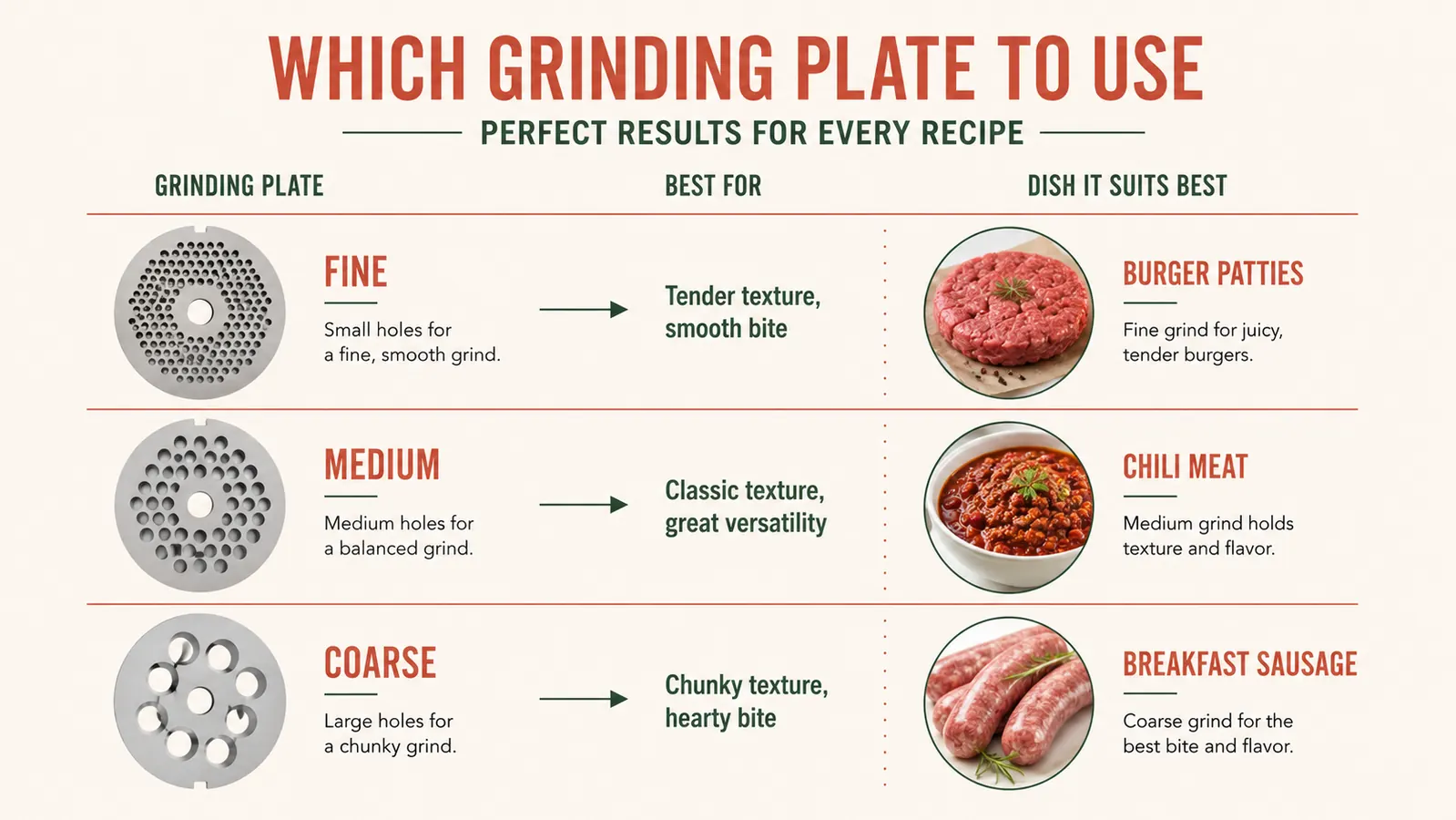
The ALTRA LIFE ships with three plates, and which one you use depends entirely on what you're making. I run the medium plate for everyday burger, since it gives that classic diner-style texture that holds together on the grill without turning to mush. I switch to the coarse plate for chili meat, where you want distinct pieces of meat rather than a fine grind, and the fine plate for breakfast sausage, where a tighter grind helps everything bind together once you add your seasoning and pack it into patties.
Clamp the ALTRA LIFE to your counter edge if it has a base clamp, or make sure it's sitting flat on a stable surface with the hopper positioned over the edge so the finished meat has somewhere to fall besides your countertop. Set a wide bowl or a sheet pan under the front of the machine before you plug it in, not after. I've forgotten that step exactly once and spent five minutes wiping ground chuck off the counter and the front of the cabinets.
Step 4: Feed It Right and Grind in Small Batches
Turn the ALTRA LIFE on before you drop the first piece of meat in, not after, so the auger is already turning and pulls the meat in evenly instead of stalling on a cold start. Feed strips in steadily using the plastic pusher that comes with the machine, never your fingers, and never force it. Let the auger do the pulling. If a piece is fighting the hopper opening, pull it back out and cut it down smaller rather than jamming it through by hand.
I grind in batches of about two to three pounds at a time on the ALTRA LIFE, then give the motor a five-minute rest before starting the next batch, especially in warmer months. The 2300W rating on this machine is a peak surge number, not a continuous rating, and letting the motor cool between batches keeps it running smooth through a full session instead of bogging down on batch three. For a big cookout where I'm doing fifteen or more pounds, I plan on two full sessions with a break in between rather than pushing straight through.
If the ALTRA LIFE starts to slow down mid-grind or the meat backs up in the hopper instead of moving through, stop and check for a jam before you keep pushing. Usually it's a stray piece of gristle or sinew wound around the auger. Unplug the machine, disassemble the front, clear the obstruction, and reassemble before continuing. The ALTRA LIFE has a reset button on the back for genuine overload situations, and I've had to use it exactly once, when a chunk of connective tissue jammed things up during a venison batch. Popped the reset, cleared the jam, and it ran fine after that.
Step 5: Cook It Same Day, or Package and Freeze It Right
Ground meat spoils faster than a whole cut because grinding exposes so much more surface area to air and bacteria, so treat freshly ground meat like it's already on the clock. If you're cooking same day, get it into the fridge in a covered container the moment you're done grinding, and cook it within twenty-four hours for the best flavor and food safety. Freshly ground beef straight off the ALTRA LIFE cooks up noticeably different from a foam tray that's been sitting in a grocery case, more flavor and a texture that holds together better on the grill.
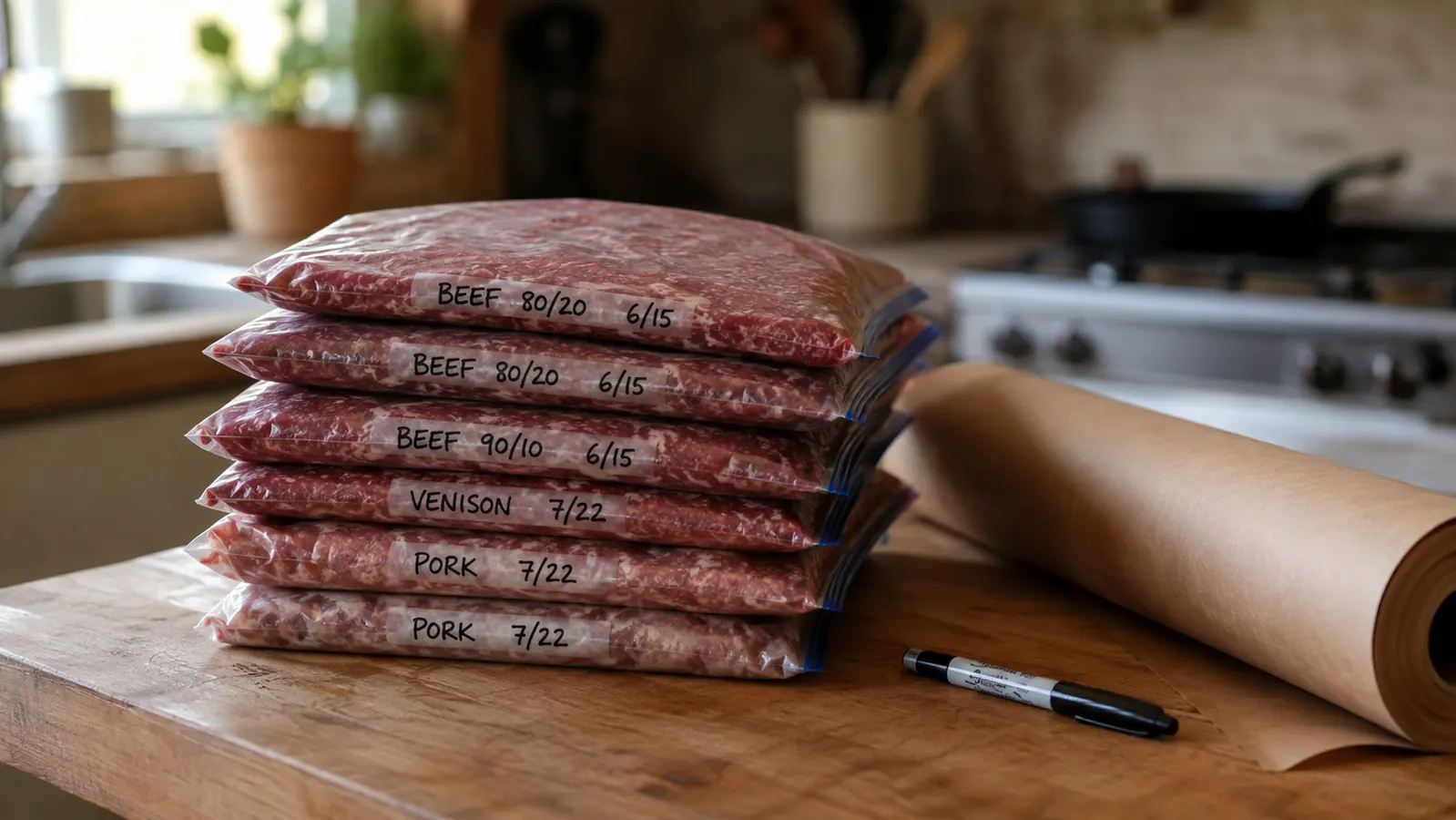
If you're not cooking it that day, portion the ground meat into freezer bags in the amounts you'll actually use, a pound for burger night, a pound and a half for meatloaf, whatever fits your family. Press the air out, lay the bags flat, and label them with the cut and the date using a marker, because ground meat all looks the same once it's frozen and you don't want to guess in six weeks whether that bag is venison or chuck. Laid flat, bags thaw faster in the fridge and stack better in a chest freezer than bags frozen upright. I've kept ground meat from the ALTRA LIFE in the freezer for up to three months with no noticeable drop in quality, provided it's wrapped well and the freezer stays consistently cold.
What Else Helps
A few things I wish someone had told me before my first Saturday with the ALTRA LIFE. Never run the metal parts through water while they're still attached to the housing, since the motor base isn't waterproof and you'll ruin it fast. Detach everything first, then wash the auger, blade, plate, and hopper by hand or run them on the top rack of the dishwasher, and dry them completely before they go back in the drawer so they don't rust. If your ground meat is coming out mushy and smeared instead of clean, nine times out of ten the meat or the metal parts weren't cold enough going in, not a problem with the machine. And don't be afraid to season a small test patty and fry it up before committing a whole batch to the smoker or the grill, since a taste test tells you in two minutes whether your fat ratio needs adjusting for next time.
The other thing worth saying plainly is the money side of this. A chuck roast on sale runs meaningfully cheaper per pound than the pre-ground tubs sitting next to it in the meat case, and that gap widens once you start buying whole cuts in bulk when they're marked down and grinding them yourself on the ALTRA LIFE instead of paying a premium for the convenience of someone else doing it. On a fixed retirement income, that difference adds up over a year of Saturday grinding sessions faster than you'd expect.
Once you know exactly what cut and what fat ratio went into your burger, it's hard to go back to a foam tray with a label you can't fully trust.
Ready to grind your own meat at home
Everything in this guide assumes you've got a machine that can actually keep pace with cold chuck and pork shoulder without a fight. The ALTRA LIFE 2300W Electric Meat Grinder has done that for me every Saturday for almost a year.
Amazon Check Today's Price on Amazon →