
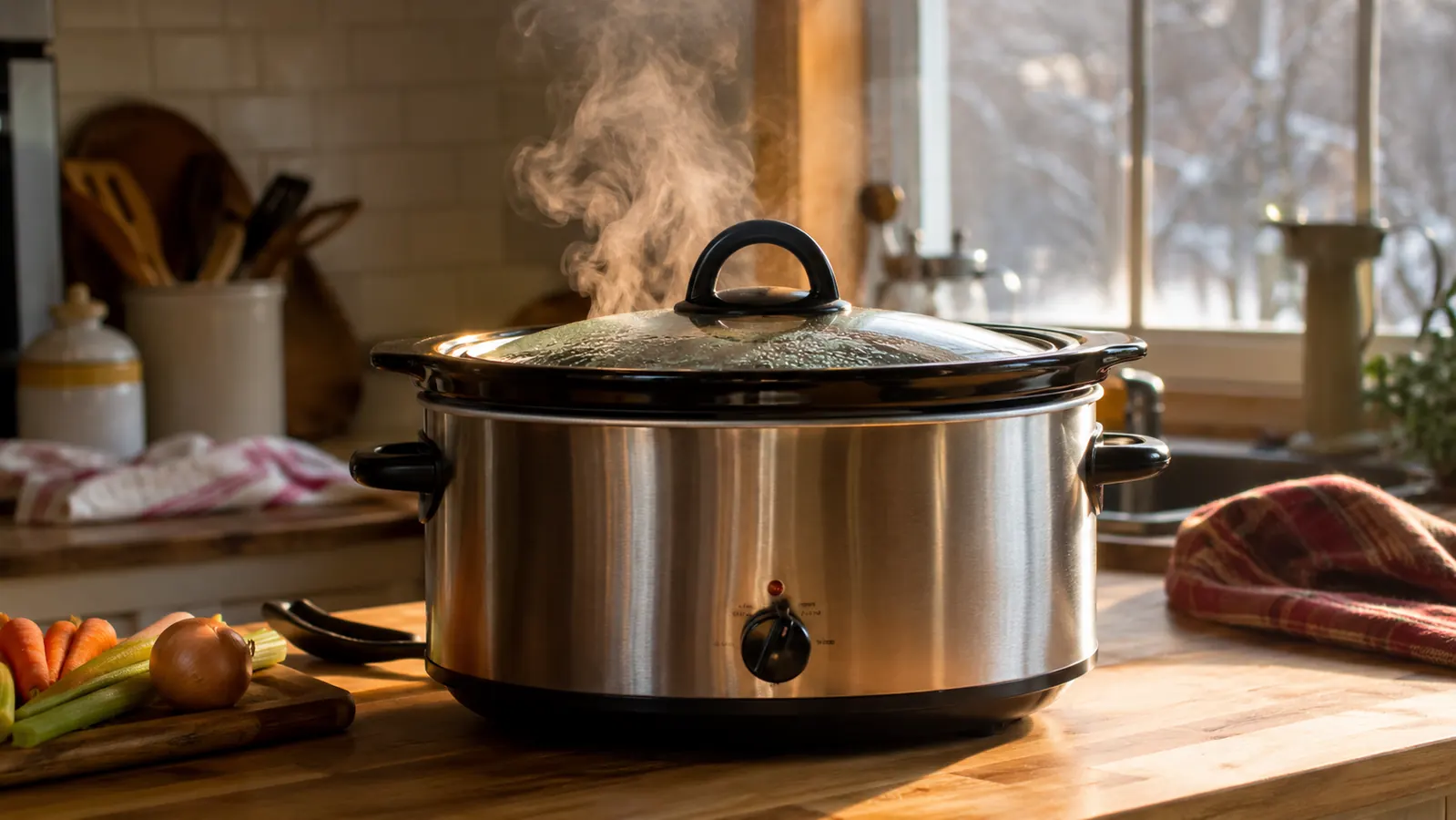
Thirty years standing over a flat-top in diner kitchens around Toledo taught me exactly one rule about dinner: if it isn't ready when people are hungry, nothing else about it matters. When I retired and started cooking every night for my wife Carol and whatever grandkids showed up after school, I ran into a problem I never had on the line. Nobody was there to watch the pot while I drove Carol to her Tuesday physical therapy or ran to the hardware store for the third time that week. That's the gap the Crock-Pot 7-Quart Manual Slow Cooker filled, and it filled it fast.
I bought mine in late October, right when Ohio turns the kind of gray that makes you want a house that smells like braised beef by four in the afternoon. Twenty-two weeks later, I'd run this Crock-Pot through pot roasts, three different chilis, a full batch of pulled pork for my grandson's graduation party, and enough chicken and rice to feed a small church potluck twice over. This isn't a first-impressions writeup. This is what I actually think after a full winter of turning that dial every single morning before Carol and I walked out the door.
Quick Verdict
The Quick Verdict
A no-frills, honest workhorse that gets weeknight dinner done without babysitting. Not fancy, not programmable, and that's exactly why it hasn't let me down.
Amazon Check Today's Price →Tired of recipes that assume someone's home all day?
The Crock-Pot 7-Quart Manual Slow Cooker doesn't need you standing over it. Set the dial before you leave and come home to dinner that's actually ready. Check today's price on Amazon.
Amazon Check Today's Price on Amazon →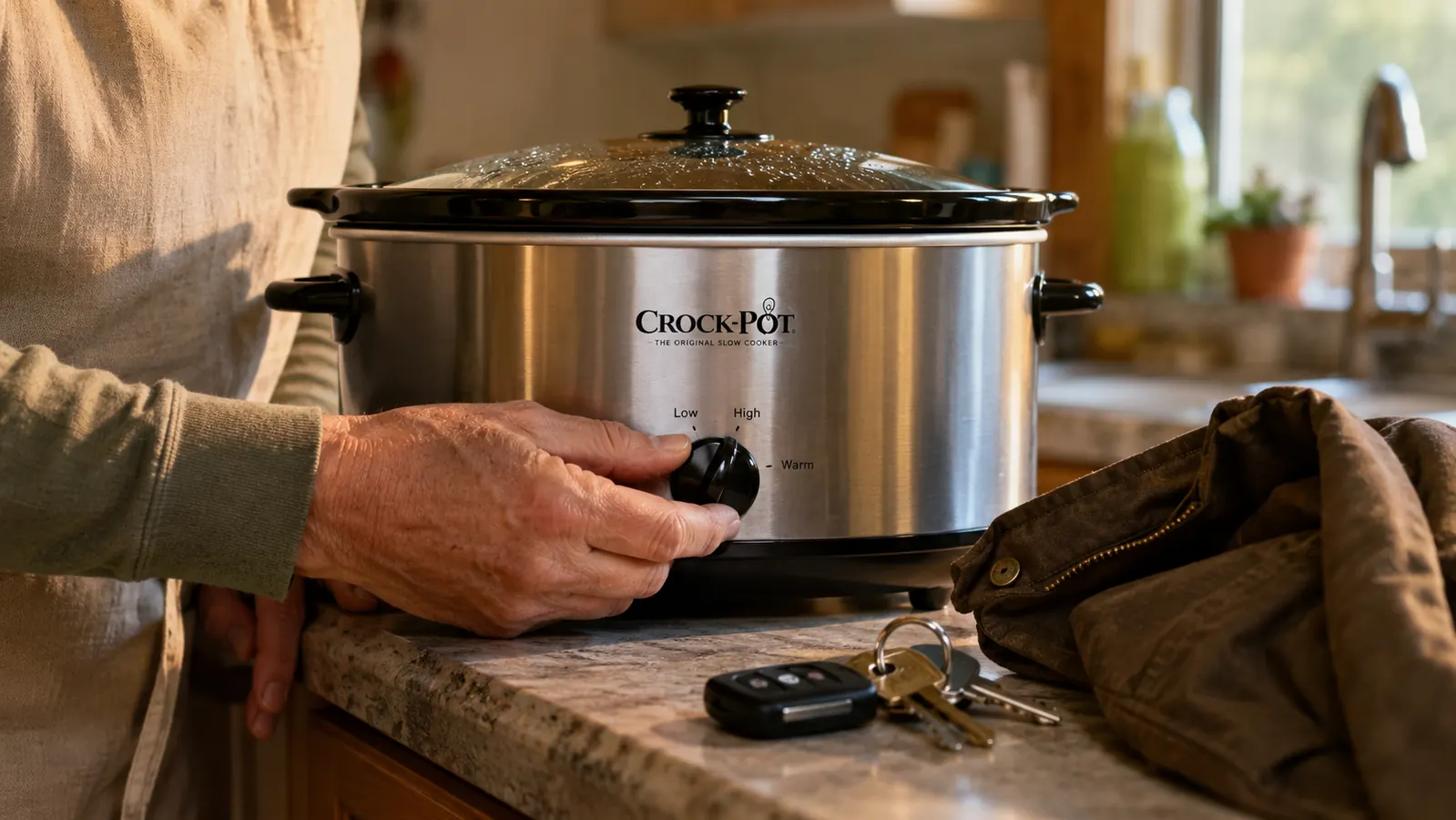
How I've Used It
We didn't jump straight into daily use. The first couple of weeks I only ran the Crock-Pot on Sundays, the way you'd test out any new piece of equipment before trusting it with a weeknight. By mid-November it had earned a permanent spot on the counter and I was loading it up four, sometimes five mornings a week. Carol handles the prep most days, chopping onions and carrots the night before and stashing them in the fridge in a bowl, and I dump everything into the stoneware insert before my coffee's even done brewing.
The 7-quart size is the whole reason I picked this Crock-Pot over the smaller models I looked at first. It comfortably fits a 6-pound chuck roast with room for potatoes and carrots around it, and the listing's claim of serving 8 or more people held up every time we had the grandkids and my son-in-law's family over on a Sunday. I've run it with a smaller 3-pound cut plenty of times too, and it doesn't dry things out just because the pot's half empty, which is something I worried about with a crock this size.
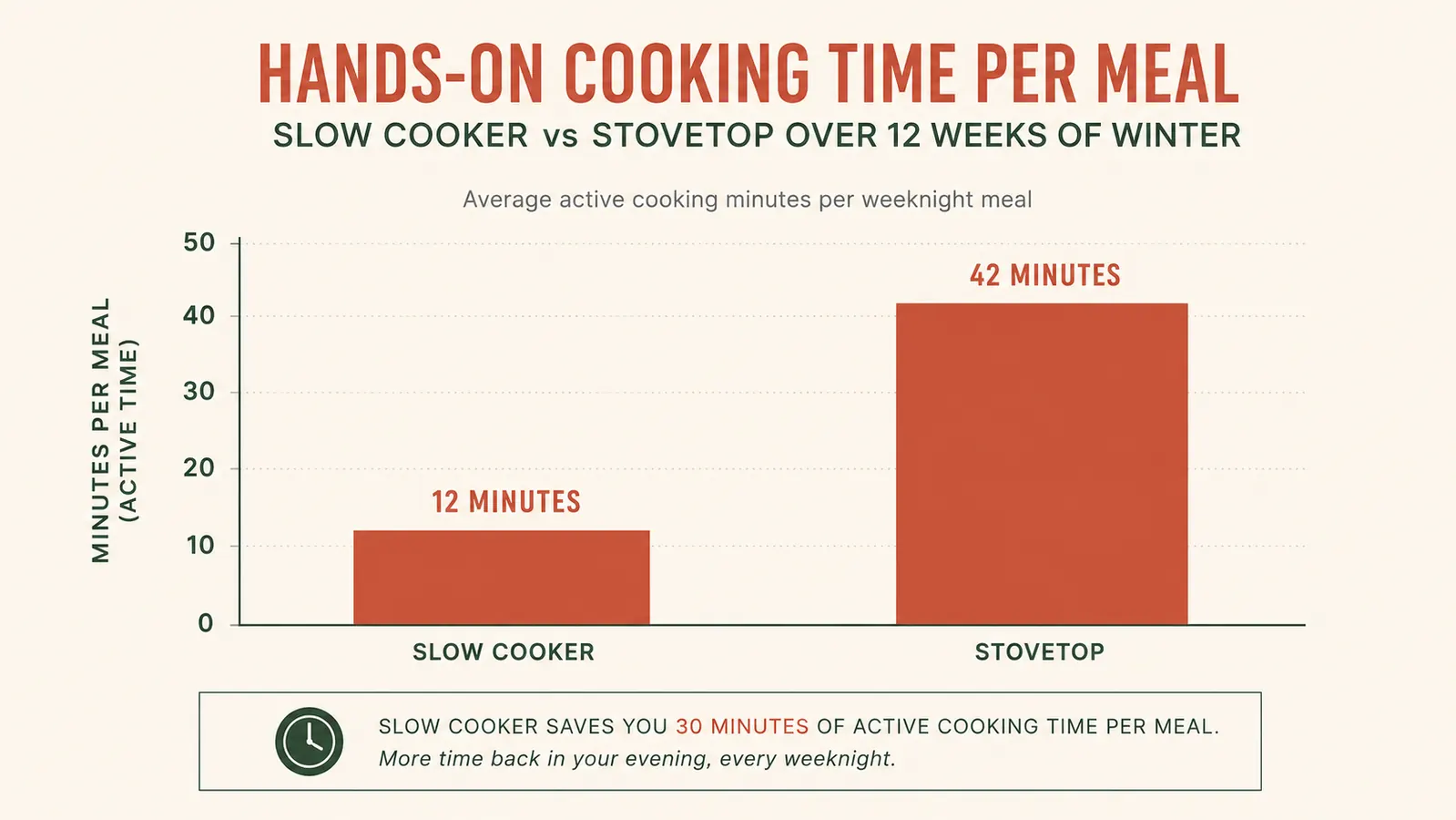
By January this Crock-Pot had become the actual backbone of our weeknight routine, not an occasional novelty. I'd set the dial to low before we left for a 9am errand run and come back at 3 in the afternoon to a kitchen that smelled like it belonged to somebody who'd been cooking all day, even though I hadn't touched a spoon since breakfast. That's the whole appeal, and after a winter of daily use, it's the one thing on my counter that's never once made me regret buying it.
The Stoneware and How Heat Actually Moves Through It
The removable stoneware crock is the heart of any slow cooker, and this one is thick, heavy, and holds heat evenly across the whole surface, not just in the middle like a couple of cheaper units I used decades ago in a diner that shut down years back. I've run a meat thermometer through a roast at four different spots in the pot on more than one occasion, mostly out of old habit from line-cook days, and the temperature spread has never been more than a few degrees. That's better consistency than some of the actual restaurant equipment I worked on for thirty years.
This Crock-Pot is a manual model, which means three settings on the dial, low, high, and warm, and nothing else. No digital timer, no app, no delay-start function. I know that sounds like a knock, but after using programmable slow cookers at my daughter's house that occasionally glitch or reset when the power blips, I've come to appreciate that a dial can't malfunction the way software can. You turn it, you walk away, and it does the same thing every time.
The warm setting is where this Crock-Pot earns its keep on busy nights. If dinner finishes cooking on low at 2pm but nobody's eating until 6, the warm setting holds the food at a safe, gentle temperature without drying it out or overcooking it further. I've left a pot roast on warm for close to three hours on a night when Carol's PT ran late, and it came out just as tender as if we'd eaten right on schedule.
A Full Winter of Sunday Roasts and Tuesday Chilis
The real test of any kitchen tool isn't the first week, it's whether it's still doing its job in month four without complaint. This Crock-Pot has run at least four times a week since late October, and the stainless steel exterior still looks close to new aside from a couple of fingerprint smudges that wipe off with a damp cloth. The stoneware itself hasn't chipped, cracked, or stained despite going through tomato-heavy chilis that I'd have expected to leave some color behind.
I've made the same pot roast recipe on this Crock-Pot probably a dozen times this winter, and the results have been consistent every single time, which matters more to me than any single amazing meal. Consistency is what you need on a Tuesday when you're tired and just want dinner to work. The one place I noticed any real difference between batches was when I overfilled the crock past its fill line trying to stretch a recipe for a bigger crowd, and the lid didn't seal quite right, which slowed the cooking down by close to an hour. That one's on me, not the machine.
The handles on the crock itself, the ones you use to lift the stoneware in and out for serving or cleaning, have held up fine through daily lifting, no wobble, no cracking at the joints. The glass lid has survived a couple of near misses when a grandkid set it down too fast on the counter, and it's still intact. For something that gets handled roughly by kids reaching for seconds most nights, that durability has mattered more to me than any spec sheet number.
The Tradeoffs Nobody Puts in the Amazon Listing
This Crock-Pot is not small. The 7-quart size that makes it great for a family of six or more also makes it a genuine counter hog. We keep ours on the counter full time now because we use it so often, but if you've got limited kitchen space, you're going to feel this thing's footprint every day, not just when you're cooking. It doesn't tuck neatly into a cabinet the way a smaller appliance does.
The manual dial is a tradeoff in both directions. I like that it can't glitch, but there's no way to program a delayed start, so if you want dinner ready at 6pm and you're leaving the house at 7am, you either need a recipe that can handle 11 hours on low without turning to mush, or you need to be home at some point to switch it to warm. We've adjusted our recipes around this, favoring tougher cuts that can go the distance, but it took some trial and error the first month.
The stainless steel exterior shows fingerprints more than I expected going in. Carol wipes it down most mornings, and it's not a big deal, but if you're picturing a slow cooker that stays spotless with zero maintenance, this isn't quite that. I'd also mention the glass lid is heavy and can be a little awkward for smaller hands to lift off safely, something to think about if young grandkids are helping in your kitchen too.

Other Slow Cookers I Considered Before Buying This One
Before settling on this Crock-Pot, I looked hard at a couple of programmable models from the same brand that cost more and added a digital timer and automatic switch to warm. I passed on those mainly because of the power-blip concern I mentioned earlier and because, honestly, I didn't need the extra buttons. If you're the kind of cook who wants to set dinner to start cooking at a specific hour while you're at work, a programmable model is worth the extra cost, and it's worth reading up on how that compares to a pressure-cooker style multi-cooker too, since the two solve different problems.
I also seriously considered a smaller 4-quart Crock-Pot before landing on the 7-quart, since most nights it's just Carol and me. But knowing how often the grandkids show up unannounced, and how much I like having leftovers for lunch the next day, the bigger crock has been worth the extra counter space every time. If you're cooking mainly for one or two people with no leftovers desired, the smaller size makes more sense and you should size down.
What I Liked
- 7-quart stoneware handles a full 6-pound roast with room for vegetables
- Even heat distribution across the whole crock, tested with a thermometer
- Simple manual dial that hasn't glitched once in a full winter of daily use
- Warm setting genuinely holds food safely for hours without overcooking
- Stoneware and stainless exterior show no real wear after months of heavy use
Where It Falls Short
- No programmable timer or delayed start, you need to be reasonably close by
- Takes up serious counter space if you don't have room to leave it out
- Stainless exterior shows fingerprints and needs regular wiping
- Glass lid is heavy, awkward for smaller hands to lift safely
- Overfilling past the fill line throws off the lid seal and cook time
It doesn't have a single button or a screen, and that's exactly why I trust it. Turn the dial, walk away, and it does the same job every time, which after thirty years of temperamental restaurant equipment is worth more to me than any app.
Who This Is For
If you're cooking for a family of four or more on a regular basis, or you host Sunday dinners the way we do, the 7-quart size on this Crock-Pot earns its keep fast. It's also a solid fit for anyone who works a schedule where mornings are the only real window for meal prep, since the low setting can carry a tough cut of meat for 8 to 10 hours without needing a check-in. I'd point it at anyone who's tired of weeknight dinner being a scramble and wants one less thing to think about between 4 and 6pm.
It's also a good match if you're the type, like me, who's grown skeptical of gadgets with more buttons than functions actually worth using. This Crock-Pot does one job, does it consistently, and hasn't asked me to update firmware or reset a clock after a power outage even once this winter.
Who Should Skip It
If you live alone or cook for one or two people most nights, the 7-quart size is more crock than you need, and a smaller model will fit your counter and your fridge leftovers better. If your schedule is unpredictable enough that you genuinely need a delayed start, a programmable slow cooker is worth the extra money over this manual version. And if you're after the browning and pressure-cooking speed of an all-in-one multi-cooker, this isn't that tool, it's a dedicated low-and-slow machine and it doesn't pretend otherwise.
A full winter in, and this is still the pot that does the work while I don't
No timer, no app, no nonsense. Just a dial and a crock that's fed my family every week since October. Check today's price on Amazon before you decide.
Amazon Check Today's Price on Amazon →